
CBAM IMPACT ANALYSIS
Understand how CBAM affects your steel purchase before you commit.
Examine the CBAM costs you could face, the supplier terms governing them and what needs confirming before you agree.

Before you confirm
- CBAM cost estimates
- CBAM cash timing
- Cost allocation
What needs confirming?
How your sourcing assessment works
- Choose
- Submit
- Receive
 Single assessmentMonthly retainer
Choose
Choose a single assessment or monthly retainer.

Submit
Tell us what you’re preparing to agree and when you need to commit. Share your requirements and available supplier and emissions records.
Receive
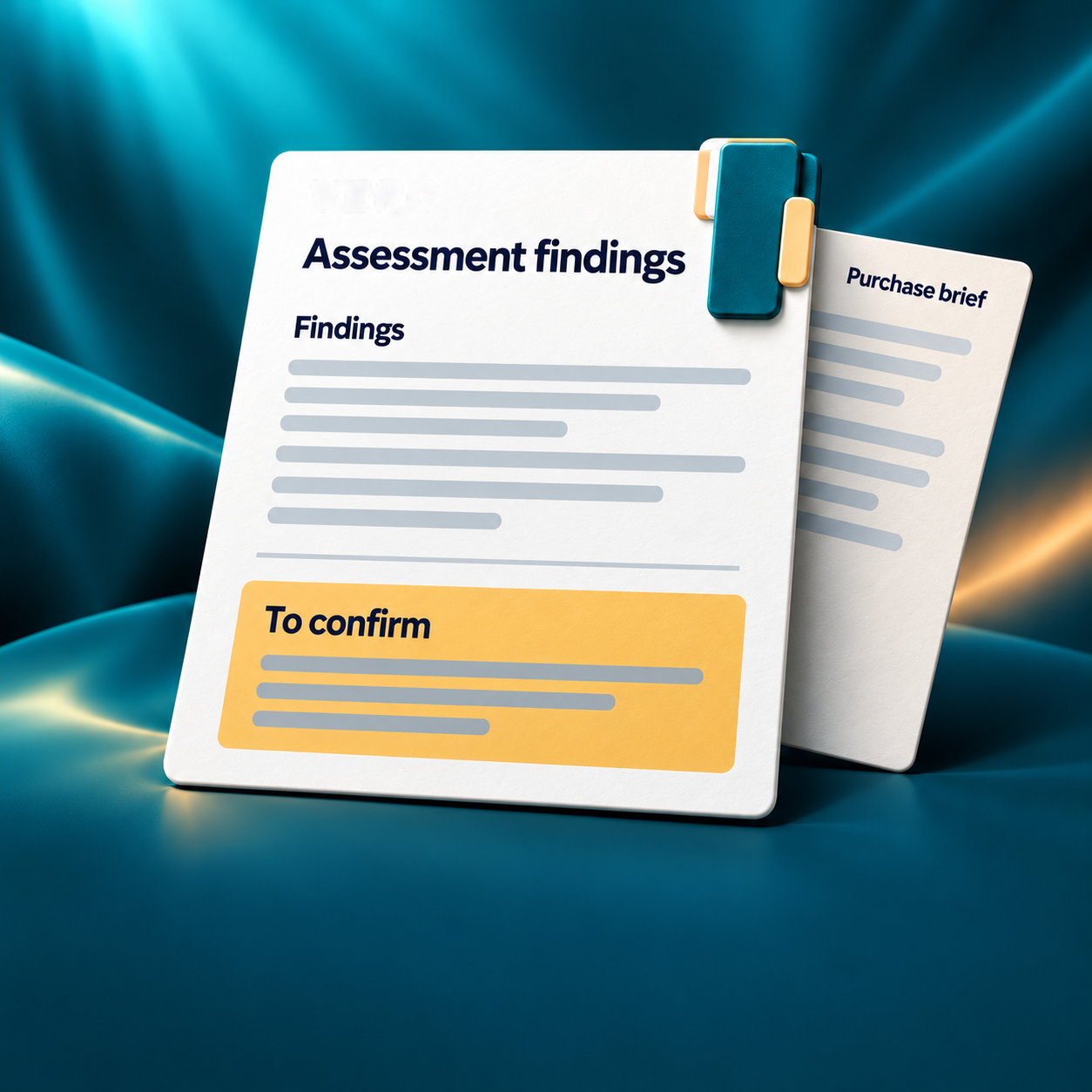
Receive a PDF explaining the CBAM findings for your commitment, with supporting calculations and what needs confirming. Discuss the reasoning with us.


I’m Devimanohar, founder of VERC. My interest in climate change led me to study how climate regulation changes business economics.
I’ve built VERC to help businesses examine those consequences while they can still act. We’re starting with the CBAM-related costs and terms of an EU importer’s steel purchase, before the buyer commits.
ASSESSMENT BENEFITS
See what supports the CBAM side of your sourcing decision.

Understand your CBAM cost exposure
See the estimated CBAM costs and supplier charges you could face, including amounts that remain uncertain or adjustable.

See what could change the findings
Identify missing emissions evidence, uncertain CBAM charges and assumptions that could affect the findings for your commitment.

Give your team a shared basis
Review the same CBAM cost estimates and assumptions with your finance, trade and sustainability colleagues.

Prepare your supplier questions
Know which CBAM charges, cost-allocation terms and emissions information need clarifying before you agree.

Keep your reasoning ready for review
Keep the findings with their supporting calculations, evidence and limits, so you can revisit the reasoning later.

CBAM SOURCING ASSESSMENT
For EU importers assessing a steel purchase.
Service centres, stockists, re-rollers and commercial steel traders.
VERC provides CBAM impact analysis for one agreed sourcing commitment. We assess CBAM-related costs, supplier charges and the stated economic effects of supplier terms against your requirements.
Before you agree an order, accept revised terms or commit further volume, you may still have options worth examining. Once you commit, some of those options may narrow.
You do not need a defined CBAM question to begin. We identify the material issues and calculations needed, then agree the work and delivery date with you.
Read the assessment scope and method
Discuss an assessment
Your CBAM sourcing assessment in one PDF.
Our conclusions on your commitment’s CBAM-related economics, with supporting calculations, evidence and the conditions or gaps that affect the findings.
Depending on the scope and available information, your assessment can include:
- Estimated CBAM cost
- CBAM-related supplier charges
- Remaining CBAM cost exposure
- CBAM payment and cash timing
- Who bears CBAM costs
- CBAM cost-adjustment terms
- CBAM comparison of feasible sourcing options
- How changed evidence or assumptions affect CBAM costs
We discuss what the findings establish, where they remain conditional and what needs confirming before you commit.

PRICING
For one sourcing commitment. Or the commitments ahead.

Start with VERC
Choose a single assessment or monthly retainer.
Frequently asked questions
A CBAM calculator estimates CBAM costs. VERC assesses those costs, supplier charges and the stated economic effects of supplier terms for one sourcing commitment against your requirements.
You can bring a commitment without a defined question. We identify the material CBAM issues and perform, check or update the calculations the assessment requires.
If you already have calculations or an adviser, their work can inform the assessment. VERC complements that work.
One defined steel-purchase commitment or closely connected sourcing configuration, with agreed requirements, quantities, period and assessment scope.
It could be an order, a bounded supply-agreement renewal or a specific volume release. It may involve one supplier or several feasible options.
One commitment need not mean one shipment. Related agreements enter only where they materially affect the agreed CBAM assessment. A purchasing portfolio is not automatically one assessment.
If your requirement is an all-in cost limit, we use the non-CBAM costs you provide as given. We check their stated basis and apparent overlap with the CBAM amounts, without independently validating those non-CBAM costs. Any finding against that limit depends on those figures being complete and accurate.
Start with what you’re preparing to agree, your requirements and your commitment deadline. Share any concerns you already have; you do not need to know which CBAM issues require examination.
Send the relevant records, such as a quotation, charge notice, proposed agreement, renewal terms or call-off details. Include available emissions information and expected import timing, where known.
We identify further information needed and the calculations we must perform or check. Existing calculations and adviser findings are optional inputs.
Where the available information supports a meaningful assessment.
We may use applicable published CBAM default values and clearly labelled scenarios, explaining how missing evidence affects the findings. Supplier figures that have not been verified remain unverified. Promised evidence is not treated as available.
We do not treat default values as a guaranteed upper limit on your CBAM cost.
Actual emissions used for CBAM declarations require the applicable accredited verification. European Commission verification guidance.
Yes. We compare CBAM cost estimates, supplier charges and cost-allocation terms on a consistent quantity and currency basis, accounting for relevant differences in timing.
We identify what each supplier says its CBAM charge covers and what exposure could remain with you. A supplier charge and a separately payable CBAM obligation remain distinct.
This comparison does not assess freight, trade duties, quotas or other non-CBAM costs. It does not establish which quotation has the lowest total landed cost.
A comparison examines the CBAM-related differences between feasible options. It does not establish the best supplier for the whole purchase.
We explain what the evidence establishes about the commitment’s CBAM-related economics, which findings depend on assumptions and what remains unresolved.
The assessment may show that a requirement is met or not met under stated conditions, support your existing approach, or identify an exposure that remains unresolved. Where the evidence is insufficient, we explain which conclusion it prevents and what evidence or clarification is missing.
The findings stay within the agreed scope. They do not establish that the whole purchase is acceptable. The wider sourcing decision remains yours.
We aim to respond within one working day of your submission, confirming the next step or asking for information we need. Weekends are excluded from this target.
We agree your assessment’s delivery date before work begins, taking account of the scope, available information and your commitment deadline. The response target applies to our initial reply, not delivery of the completed assessment.
Each request stays submitted until we move it to active. We work on one active sourcing commitment at a time.
Other submitted requests wait until we can begin them. We agree the scope and delivery date for each assessment before work begins.
A discussion of the findings and reasoning, with corrections within the agreed scope.
We correct our own errors without an additional charge. A materially changed commitment or expanded scope requires separate agreement.
No. VERC examines CBAM-related costs and the stated economic effect of supplier terms for one sourcing commitment. CBAM filing, accredited emissions verification and legal advice fall outside the offer.
We do not provide a legal interpretation of supplier terms. If their meaning is unclear or disputed, we flag the need for legal review.
Trade duties, quotas, freight and other non-CBAM costs also fall outside the assessment. If we identify an excluded issue that could affect the CBAM findings, we flag it for the relevant specialist. If it prevents a supported conclusion, we explain that limit.
You can pause your monthly retainer between sourcing commitments. Pausing stops the billing clock and preserves your remaining paid days and assessment allowance until you resume.
Cancellation stops the next renewal. Your current paid cycle remains available.
No. Each 31-day billing cycle includes up to 10 assessments. Unused assessments expire when that cycle ends.
Pausing preserves your remaining allowance within the same cycle; it does not transfer assessments into a new one.
Before you share confidential records, we agree who may access them and how they will be used, stored and retained.
Public use of your quotations, agreements, supplier information or commercial terms requires separate written permission.

Discuss your sourcing commitment
In a 30-minute call, we’ll discuss what you’re preparing to agree, your requirements and when you need the findings. We’ll consider whether an assessment fits your case.
Book a call